
Ottoman Spice Blend
Manufactured and exported from Türkiye — bulk, private label and custom blending.
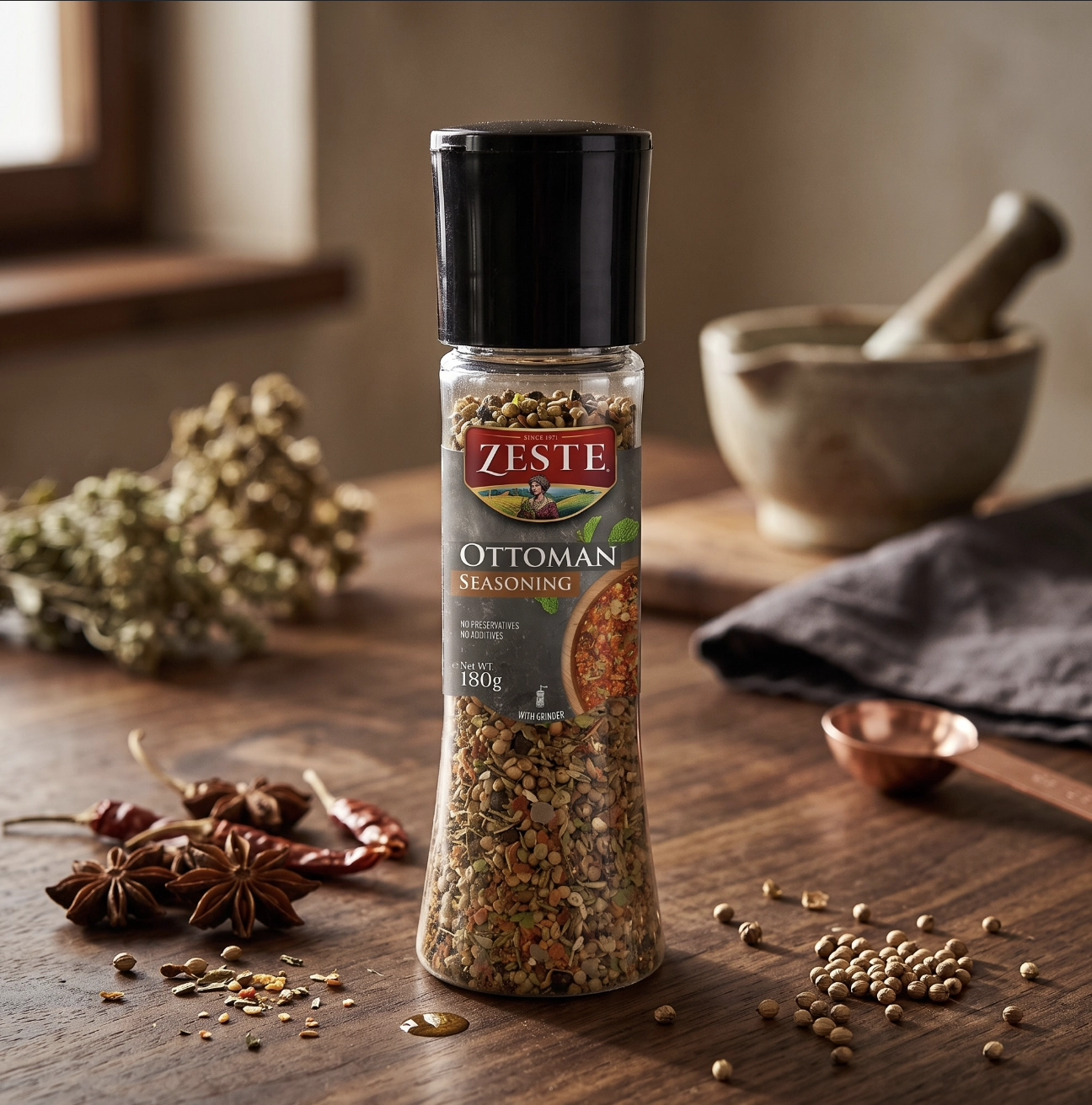
Zeste Seasoning is a herb and spice manufacturer and exporter based in İzmir, Türkiye. We produce Ottoman spice blend in both recognised formula styles and supply it in bulk, under private label, or blended to your own written specification — with a certificate of analysis issued for every lot. We ship to importers, retail brands, foodservice groups and food manufacturers across Americas, Europe, the Middle East and Asia.
What is Ottoman spice blend?
Ottoman spice blend is an all-purpose Turkish seasoning built on dried herbs, chilli and warm spices, used on grilled and minced meat, köfte, kebab, rice and vegetables. In Türkiye it is known as Osmanlı Baharatı. Zeste Seasoning manufactures it in İzmir from Turkish-grown herbs and exports it worldwide in bulk, private label and custom formats.
It is the seasoning most often specified by buyers building a Turkish or Eastern Mediterranean range: kebab and grill lines, barbecue ranges, retail shaker and grinder products, dipping-oil and meze products, and ready-meal or further-processing applications. If that describes what you are sourcing, this is the right product page — the sections below cover formulation, packaging, commercial terms and quality documentation.
One thing to settle before you request a quote: Ottoman spice blend is a culinary style rather than a standardised formula. It carries no geographical indication, and composition varies significantly between Turkish spice houses. That variation is the first thing worth understanding, because it determines which product you actually receive.
Why do Ottoman spice blends differ so much between suppliers?
Because two distinct formula families are sold under one name. The first is a red, chilli-forward grill blend built on pul biber, black pepper, cumin and coriander. The second is a tangy, herbal blend built on sumac, thyme, garlic and turmeric, often carrying paprika or saffron. They serve different applications and do not substitute for one another. Zeste Seasoning produces both.
This matters more than most product listings admit. Order “Ottoman spice blend” from three Turkish suppliers and you can receive three visibly different products — different colour, different heat level, different allergen profile — each of them correctly labelled.
For an importer or private label brand that is a sourcing risk best closed at the enquiry stage rather than at the port.
We compared the ingredient declarations published by retail sellers of Ottoman spice blend across the Turkish, UK and US markets. The split is consistent enough to be treated as two separate product categories rather than variations of one:
Celery seed appears in some commercial Ottoman blends. Celery is one of the 14 declarable allergens listed in Annex II of EU Regulation 1169/2011 and must be emphasised within the ingredient list on retail packaging. Equivalent rules apply in Great Britain under assimilated law, enforced in England by the Food Information Regulations 2014, with parallel instruments in Scotland, Wales and Northern Ireland. If you are relabelling for retail, get the allergen declaration in writing before the first shipment rather than after it.
The two styles side by side. Buyers who have only seen one are often surprised the other carries the same name.
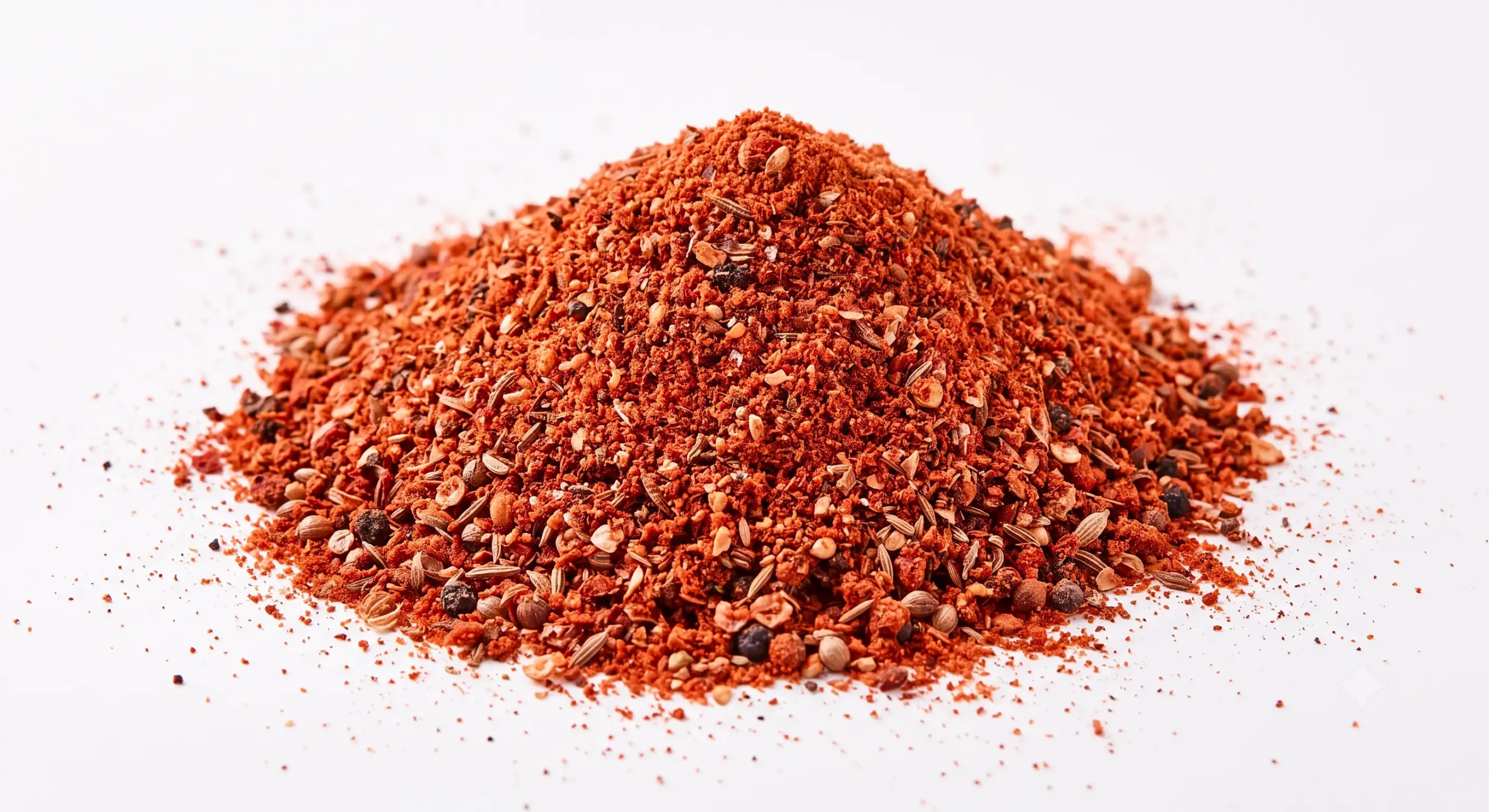
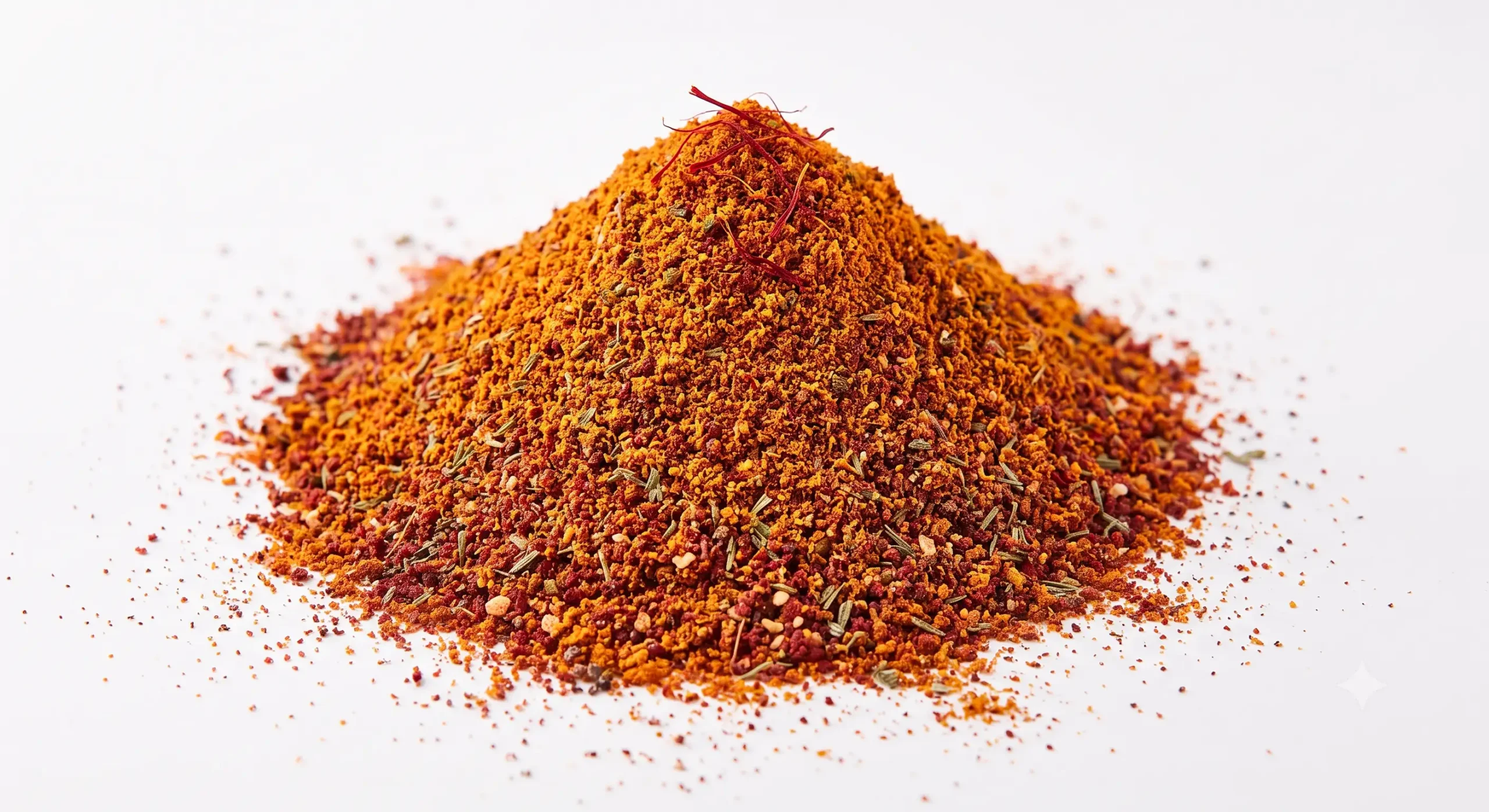
Which style you need follows from the end application. Supplying a kebab chain, a butcher counter or a barbecue range points to Style A. Building a Mediterranean pantry line, a table seasoning or a dipping-oil product points to Style B. If you are not sure, ask for both in the sample pack — it costs nothing extra and settles the question in one round instead of three.
Can you produce a custom Ottoman spice blend to our own recipe?
Yes. Zeste Seasoning blends Ottoman spice to a customer-specific written specification, working from a physical reference sample, an existing ingredient declaration, or a described target profile. Most of the Ottoman blend we ship is a customer formula rather than a catalogue product. Buyers who prefer not to develop their own can order our house formula unchanged.
There is a reason we lead with custom rather than a fixed recipe, and it is not flexibility for its own sake. Because Osmanlı Baharatı has no standard composition, a published percentage table would be a marketing claim rather than a specification — and the buyer would still have to agree an actual spec with us before production. We skip the theatre and start from the spec.
What we need from you to develop a formula
- A reference — a physical sample, a competitor’s ingredient declaration, or a written description of the profile you want (heat level, acidity, colour, grind).
- The application — dry rub, mixed into mince, bloomed in oil, retail shaker, foodservice tub. Grind and flow properties change with all of these.
- The destination market — labelling rules, allergen tolerance and permitted ingredients differ between the EU, UK, Gulf and North America.
- Your commercial frame — target landed cost, expected annual volume, and the Incoterm you work on.
What you get back
A written specification covering the ingredient list in order of predominance, origin of each component, grind and sieve profile, moisture, colour reference, full allergen declaration, shelf life and storage conditions. Once you approve it, that document governs every subsequent lot — and the certificate of analysis for each production lot is issued against it.
We do not publish customer formulas, and we do not sell a customer's developed recipe to another buyer. If you want that in writing before sharing a reference sample, ask and we will sign it.
How do we blend Ottoman spice at Zeste?
We work from a house formula that has been in continuous production for more than twenty years. It has never been a fixed recipe. Each time we entered a new market the blend was adjusted — heat down for some, acidity up for others, grind coarser for foodservice, finer for retail shakers — and the version we ship today is the accumulation of those changes rather than a recipe recovered from an archive.
A twenty-year-old formula that has never stopped moving
Spice houses tend to talk about their blends as if they were fixed inheritances. Ours is not, and we would rather say so. The backbone has held for two decades: Turkish-grown dried herbs, chilli, and a warm-spice frame. Almost everything around that backbone has been revised at some point, usually because a buyer in a specific market told us something did not work there.
The pattern repeats across markets. Northern European buyers consistently pull the heat down and the herb up. Gulf and Middle Eastern buyers push in the opposite direction and want more warm spice. Foodservice wants a coarser cut that stays visible on a finished plate; retail grinder and shaker formats need tighter particle sizing so the pack does not separate on the shelf. None of these are different products in the catalogue sense — they are the same blend, adjusted to where it is going.
That is why this page does not print a percentage table. After twenty years the honest answer to "what is in it?" is "which version?", and the useful answer is a specification agreed with you before the first production run.
Why we blend to order rather than hold aged stock
Ground blends lose volatile aroma faster than whole spices — the surface area that makes a blend work against a piece of meat is the same surface area that lets the aroma go. We blend against confirmed orders rather than holding long-aged finished stock, so that the material in your container is close to its blending date rather than close to the end of its shelf life. It is a slower way to run a warehouse and a better way to ship a spice.
How we keep a formula consistent between shipments
Natural variation is real: chilli colour shifts between harvests, and herb aroma varies with growing season and altitude. We manage this against the approved specification rather than against the previous batch, using retained reference samples so that lot twelve is compared to the standard you signed off, not to lot eleven.
How does Ottoman spice compare to baharat, za'atar and Italian seasoning?
Ottoman blend is savoury and grill-oriented; baharat is warm and sweet-spiced; za’atar is herbal, tangy and sesame-based; Italian seasoning is purely herbal with no chilli and no acid. They are not interchangeable, and a buyer sourcing a generic “Middle Eastern seasoning” almost always has one specific profile in mind.
We supply all four categories from İzmir. If you are building a seasoning range rather than sourcing a single SKU, see our full product range, or read how we grade the herb underneath most of these blends in our guide to dried oregano volatile oil grades.
What packaging and formats are available?
Ottoman spice blend ships in three formats: food-grade bulk for further processing or repacking, private label retail packaging under your own brand, and foodservice units for distributors and kitchens. Packaging is specified with the formula, because grind and pack format have to be decided together.
What are the minimum order, lead times and Incoterms?
Zeste Seasoning works on pallet-based quantities rather than a fixed container minimum, so trial volumes and mixed-product pallets are both possible. Lead time depends on whether the formula is already approved and whether packaging is printed. We quote on the Incoterm you work on — tell us which one and we will price against it.
Publishing terms openly saves everyone a round of correspondence. If your volumes look small to you, send the enquiry anyway — pallet-based ordering exists precisely so that a first trial does not have to be a container.
Frequently asked questions
Premium Ottoman seasoning manufactured and exported directly from İzmir, Türkiye. Available in bulk, private label, or custom blended to your exact specifications. If you are looking for Ottoman Spice, please drop us an email at sales@zesteseasoning.com.